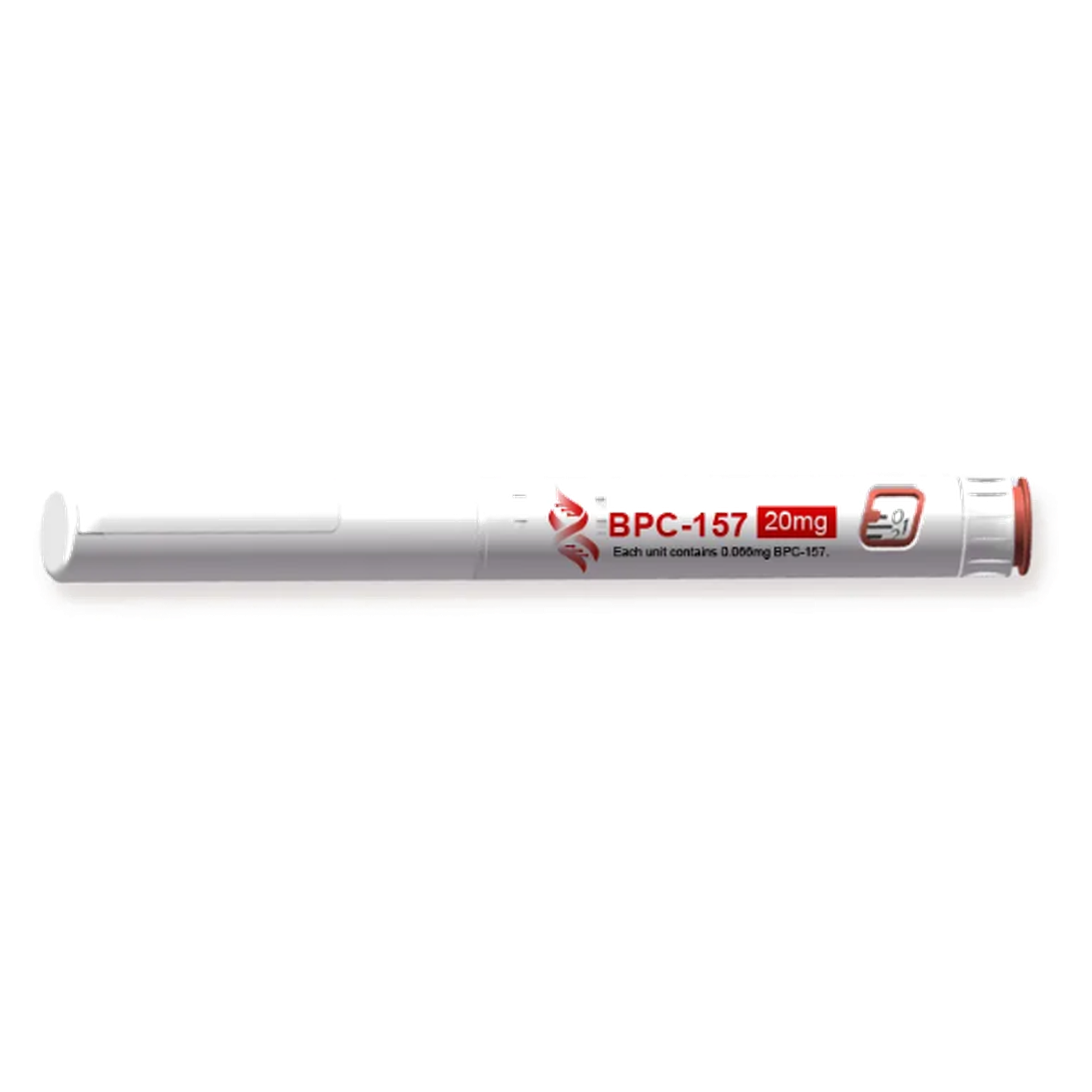
BPC-157
Body Protection Compound-157
A peptide studied primarily for its potential role in tissue repair, gastrointestinal protection and regenerative signaling.
What Is BPC-157?
Why Is BPC-157 Being Studied?
- Tissue repair and regenerative signaling
- Tendon and ligament recovery
- Gastrointestinal mucosal protection
- Inflammatory signaling
- Angiogenesis and tissue remodeling
How Does It Work?
Researchers have proposed that BPC-157 may interact with growth factor pathways (such as VEGF-related signaling) and nitric oxide activity, both of which play roles in blood vessel formation and tissue remodeling. These mechanisms are largely derived from laboratory and animal studies and have not been fully confirmed in humans.
BPC-157
Growth factor & nitric oxide signaling
Angiogenesis & fibroblast activity
Tissue repair processes under study
What Does The Evidence Say?
Human Research
Controlled human clinical trial data for BPC-157 remains very limited. Most reports of effects in people come from anecdotal use rather than peer-reviewed clinical studies.
Preclinical Research
Animal studies have explored BPC-157's effects on tendon, ligament, muscle, and gastrointestinal tissue healing, with researchers observing changes in blood vessel formation and growth factor expression in these models.
What We Don't Know Yet
Optimal human dosing, long-term safety, and whether findings from animal studies translate to people are not yet established. BPC-157 is not an FDA-approved drug product.
Areas of Research
Recovery
Early research has focused on whether BPC-157 may support the body's natural tissue-repair response after strain or injury.
Connective Tissue
Animal studies have examined effects on tendon and ligament healing, an area of ongoing laboratory interest.
Gut Health
BPC-157 was originally isolated in connection with gastric protective factors, leading to research on gut lining support.
Inflammatory Signaling
Some preclinical work has looked at how BPC-157 may influence local inflammatory responses during healing.
Why Might Someone Discuss This With Their Provider?
Someone focused on recovery, connective-tissue health, or regenerative medicine may encounter BPC-157 while researching emerging peptide therapies.
Whether a therapy is appropriate depends on individual health history, medications, goals and clinician evaluation.
Important Considerations
BPC-157 is not approved by the FDA for any medical use and is not an FDA-approved drug product. It is typically available only through compounding pharmacies under provider direction.
Available evidence is preliminary and primarily preclinical. Long-term safety data in humans has not been established. Anyone considering BPC-157 should discuss their full health history and current medications with a licensed healthcare provider.
Related Peptides
KLOW
A four-peptide combination expanding on aesthetic and tissue-repair research with the addition of the anti-inflammatory peptide KPV.
BPC-157 + TB-500
A two-peptide recovery-focused combination pairing two separately researched tissue-repair peptides.
GLOW
A three-peptide combination exploring aesthetic skin-support signaling alongside tissue-repair pathways.
Research & References
No references have been added for this entry yet. This library is updated on an ongoing basis.
The Peptide User Guide is provided for educational purposes and is not intended to diagnose, treat, cure, prevent, or provide individualized medical advice. Research surrounding many peptides and investigational therapies continues to evolve, and the strength of evidence varies significantly between compounds and applications. Treatment decisions should be made in consultation with a qualified healthcare professional.